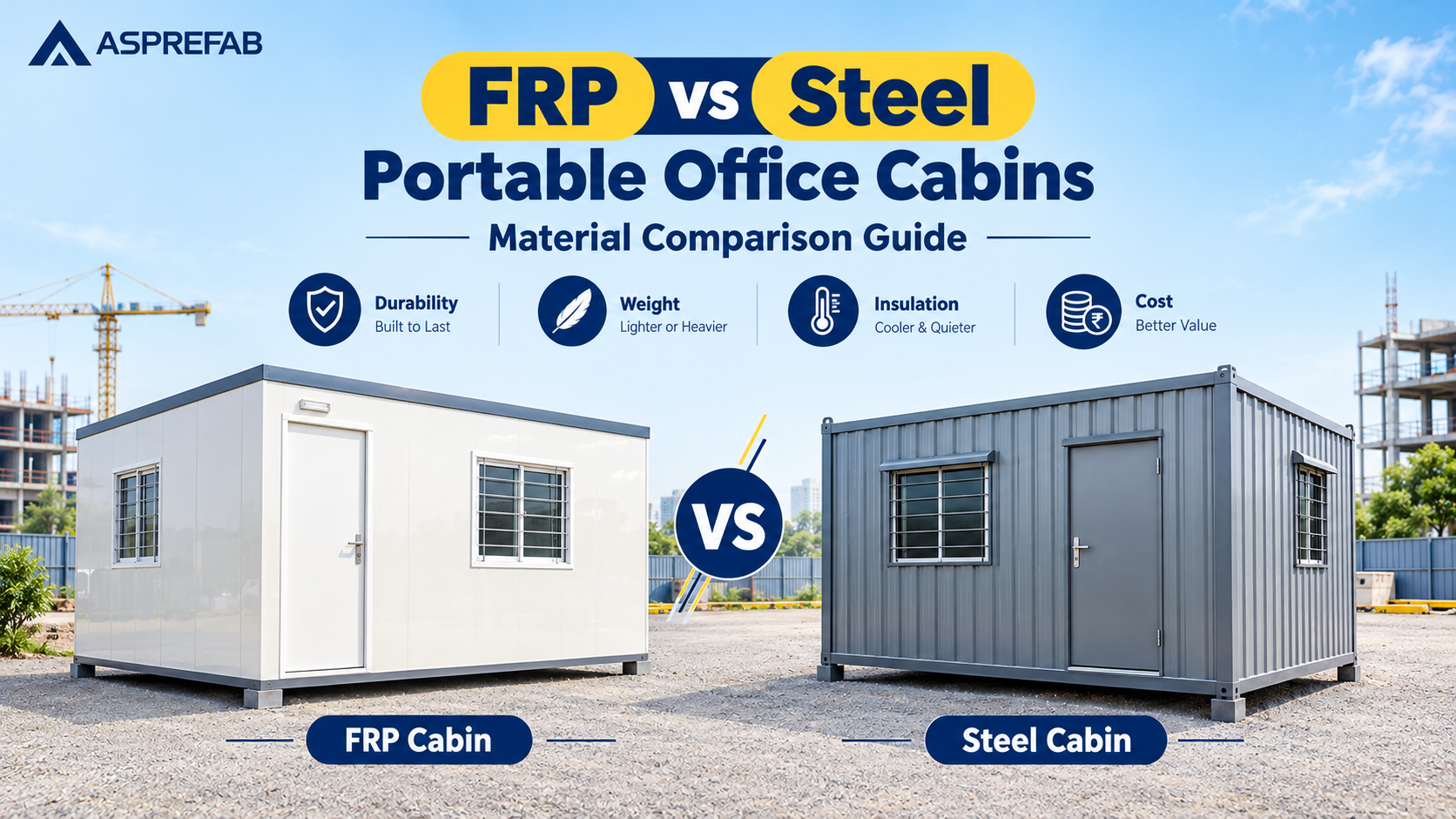


Picking a cabin material feels simple until the first monsoon arrives. Then your “budget-friendly” choice starts rusting, sweating, or cooking your team alive. In this guide I compare FRP and steel on weight, insulation, corrosion, cost and lifespan. By the end of this guide you will know which material fits your site.
What Is the Difference Between an FRP Office Cabin and a Steel Cabin?
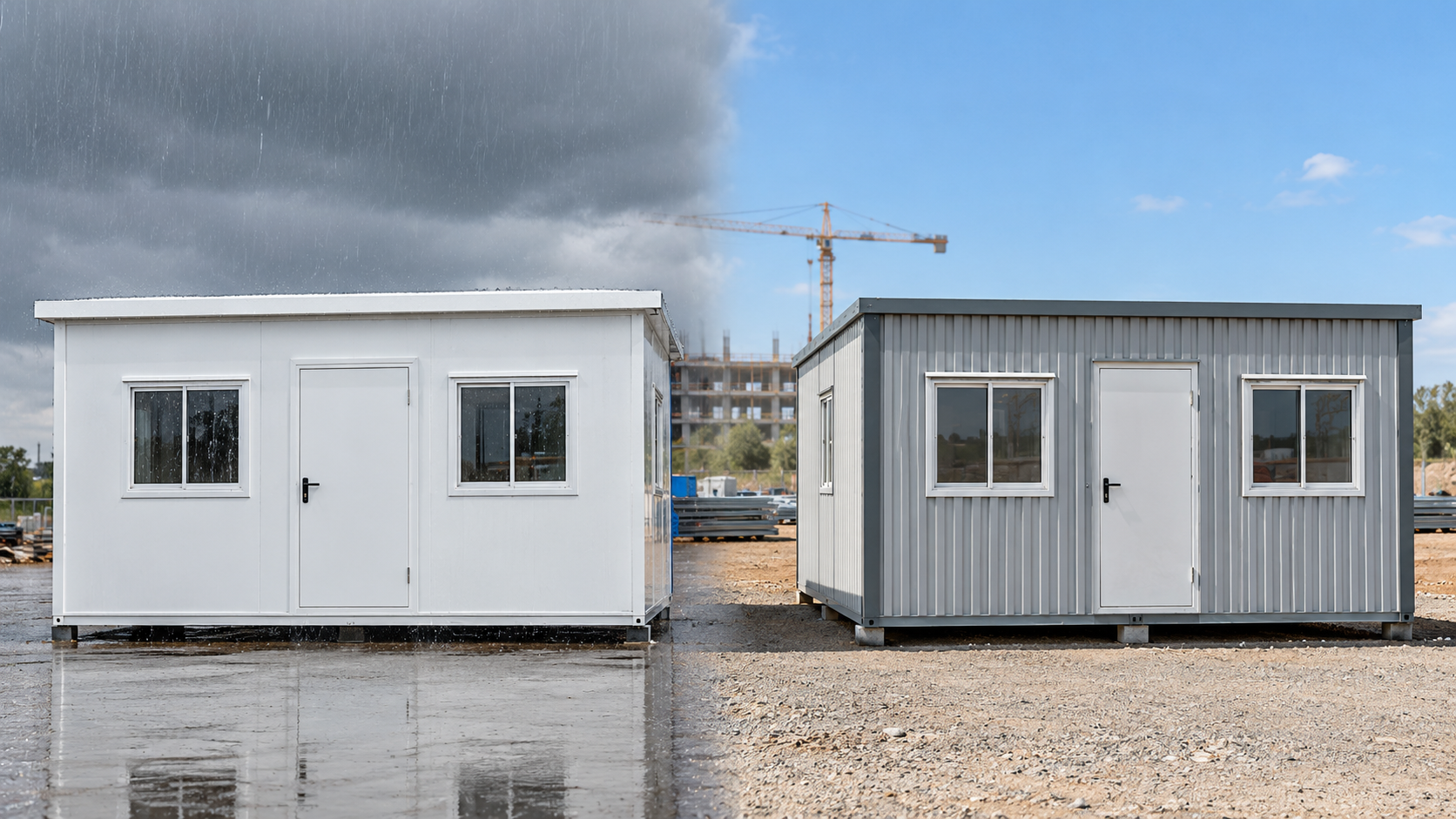
An FRP office cabin uses fibre-reinforced plastic panels, made of glass fibre bonded with resin. A steel cabin uses galvanised iron (GI) or mild steel sheets built over a metal frame. Both types come prefabricated,.
They react very differently when exposed to outdoor conditions. Think of it this way. Steel is the sturdy marathon runner who hates water. FRP is the swimmer who does not care about rain at all.
Here is the quick snapshot:
- FRP office cabin: lightweight, non-metallic, naturally resistant to rust and salt.
- Steel/GI: stronger per panel, easier to modify, and usually cheaper at the start.
Buyers often search for a portable office cabin, a porta cabin office, or a site office cabin without checking the material first. That is the most expensive shortcut in this category.
Why Does Material Choice Matter for Portable Office Cabins?
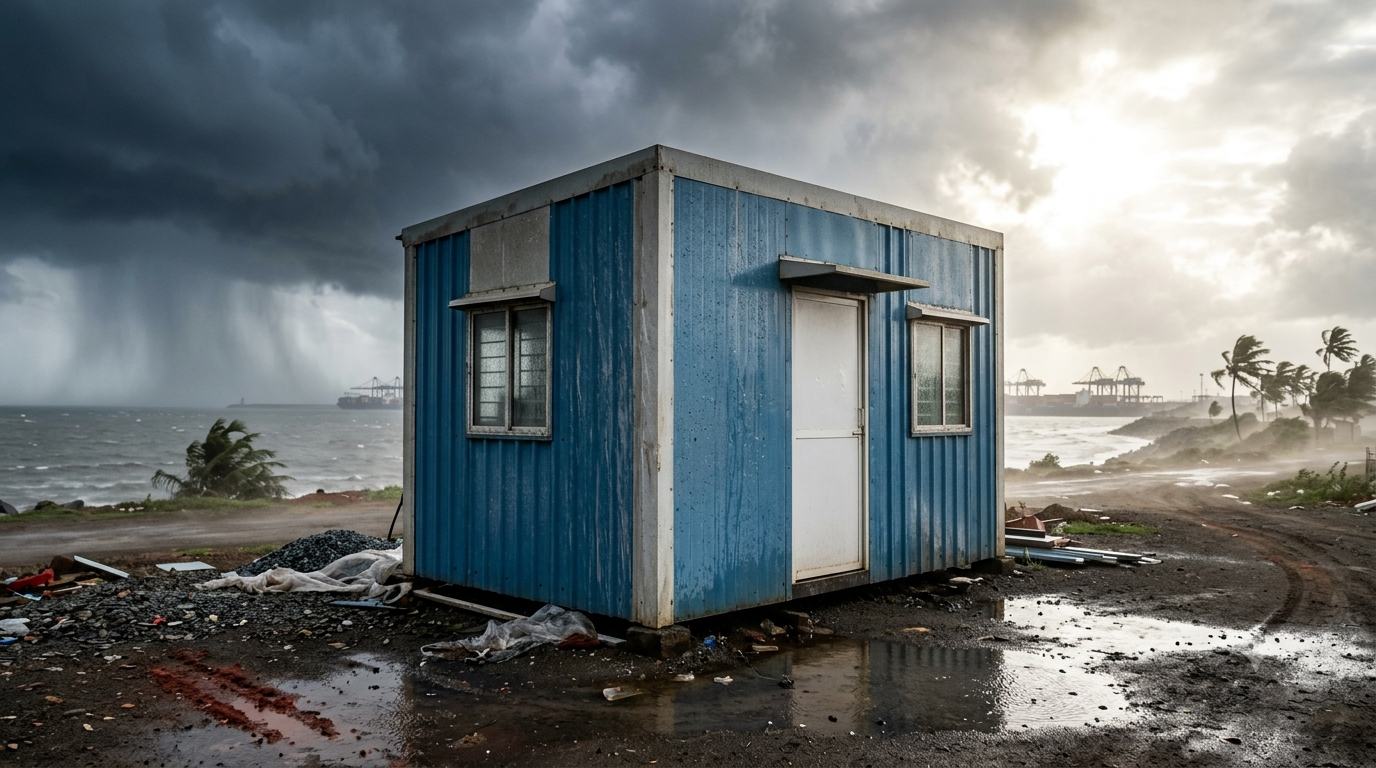
The material decides how the cabin lasts how much power the AC uses and how often the cabin requires repairs. Layout and colour come second. An office cabin is not a sofa. It sits outside in sun, salt, dust and rain for years. Your Portable Office Cabins range may look identical on paper. The wall material changes everything after year two. India makes this choice sharper.
According to the Press Information Bureau the country has a coastline of 7,516 km. The India Meteorological Department also notes that the southwest monsoon brings 75 percent of annual rainfall. Moisture and salt are not rare events here. They are the default setting.
Is an FRP Office Cabin Lighter Than Steel?
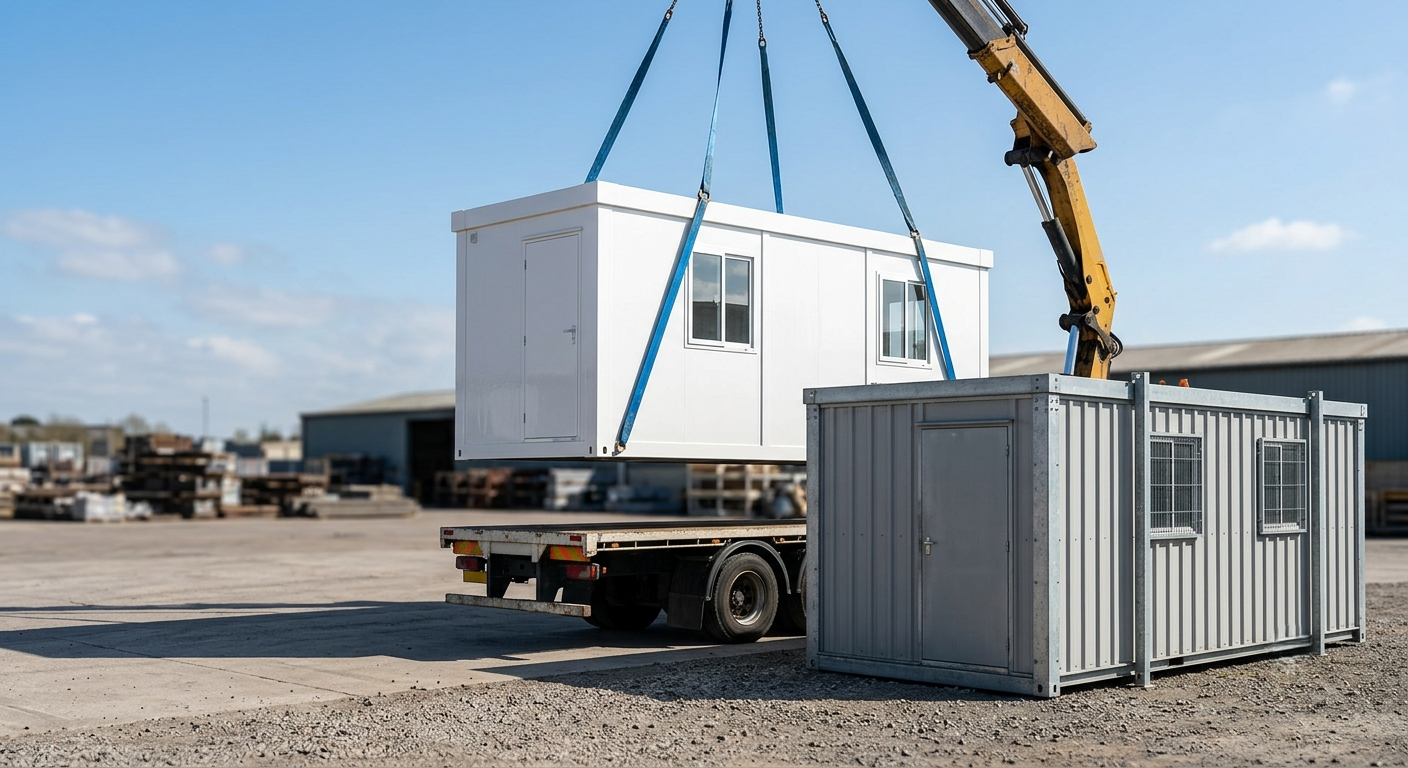
An FRP office cabin is lighter. Steel has a density of roughly 7,850 kg per cubic metre, while glass-fibre composites are commonly around 1,500 to 2,000 kg per cubic metre. Same thickness, less weight. Lightweight panels simplify lifting, reduce crane requirements, lower transport costs, and save money with every relocation.
Steel is not hopeless here. A engineered steel frame, with GI sheets stays manageable.. A modular office cabin built in sections can ship in parts. Still when you must shift a cabin across terrain FRP wins the weight round.
A small warning: lighter does not mean flimsy. An frp office cabin needs anchoring in windy areas or your office may attempt a short flight.
Does an FRP Office Cabin Insulate Better?
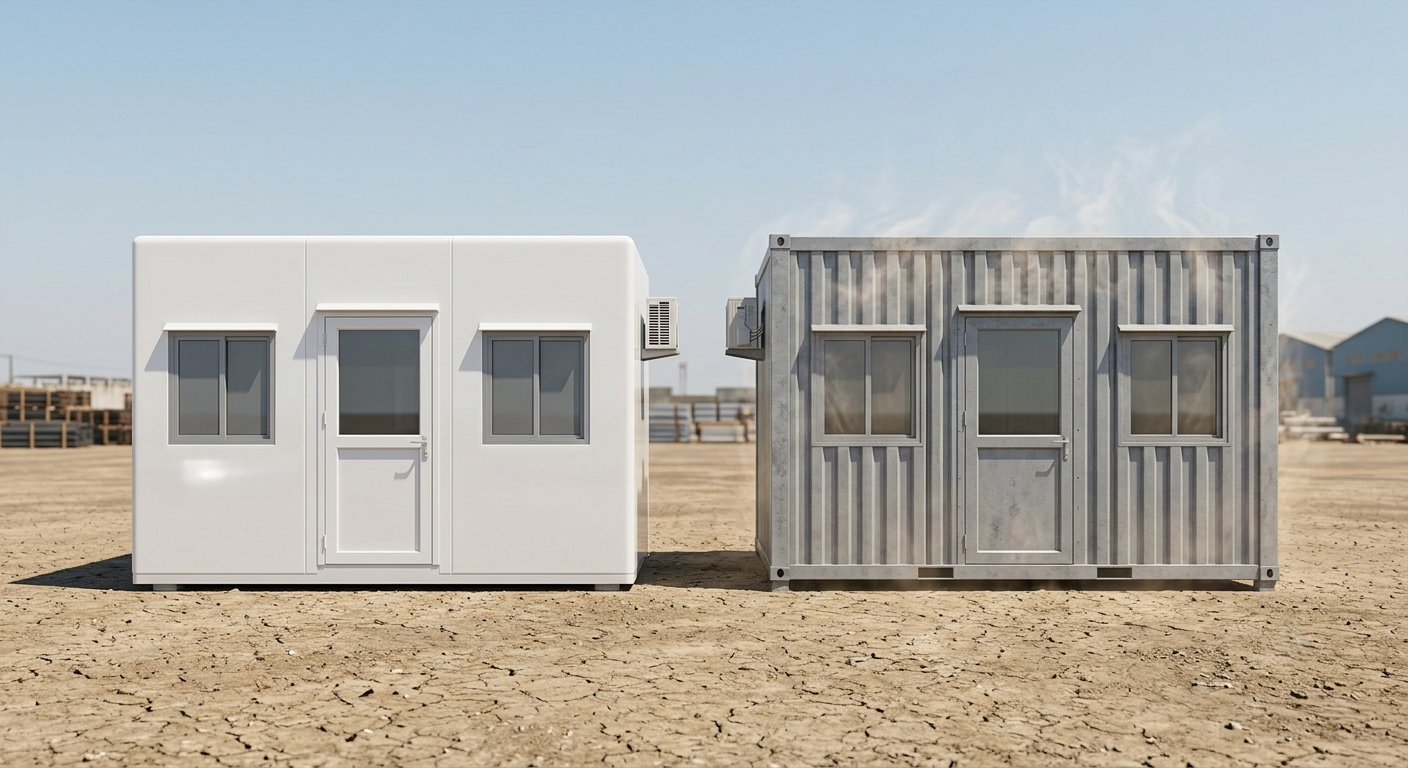
An FRP office cabin insulates better on its own. Steel conducts heat a thousand times faster than typical plastic composites. Steel is around 50 W/mK and glass-reinforced plastics are often near 0.2, to 0.3 W/mK. That gap shows up on a hot afternoon. A bare steel wall absorbs sun and radiates it inside. An frp office cabin wall slows the heat down.
Steel cabins can still perform well with PUF or rock wool sandwich panels. Insulation core thickness matters more than the outer skin. Ask for the exact core material and density, not just the word “insulated”.
For air‑conditioned offices better insulation cuts the cooling load. The Bureau of Energy Efficiency through its Energy Conservation Building Code treats envelope heat gain as a factor, in building energy use. An office cabin is a building and the same logic applies.
Which Resists Corrosion Better: FRP or Steel?
An FRP office cabin resists corrosion better because it contains no iron to rust. Steel relies on a zinc coating. That coating wears away, over time especially near salt air. This is the biggest dividing line in the whole comparison. Let us break it down by site type.
How Does a Coastal Site Affect Each Material?
Coastal air is harsh on metal. ISO 9223 the international standard, for corrosivity puts marine and heavily polluted air into higher corrosivity categories. In corrosivity categories zinc coatings get faster. A galvanised cabin, near the sea needs repainting, scratch repair and rust checks at screw points and joints. If you miss one season the rust spreads fast. An frp office cabin ignores salt spray.
That is why ports, shipyards and seaside resorts lean, towards FRP. If your site sits within a kilometres of the shore treat an office cabin as the default. Only go with steel if you have a reason.
What About High-Humidity Locations?
Humidity attacks steel inside and outside. Humidity forms condensation on cold steel surfaces while trapped moisture causes rust, beneath paint coatings over time. An frp office cabin resists water absorption and rust. However, proper seals around windows and doors prevent moisture from entering through gaps or joints.
For regions, like Konkan, Kerala and the north-east an frp office cabin keeps its looks with minimal care. Steel needs a maintenance routine.
Is an FRP Office Cabin Costlier Than Steel?
Steel usually costs less at the start. An frp office cabin usually costs less over time in weather. Both can be true, at the time.
Prices change depending on size, thickness, insulation, interior details and location. I won’t give numbers. Instead ask for a line-item quote.
Compare these four costs:
- Purchase price: steel often wins here.
- Transport and installation: lighter FRP can reduce this.
- Maintenance: repainting and rust repair add up for steel.
- Energy: better insulation lowers cooling bills.
Steel readymade office cabin looks affordable before coastal repainting expenses.. In dry inland areas, steel remains an economical choice.
Short projects suit GI fabricated office cabin choices, while long projects need full cost evaluations.
How Much Maintenance Does Each Material Need?
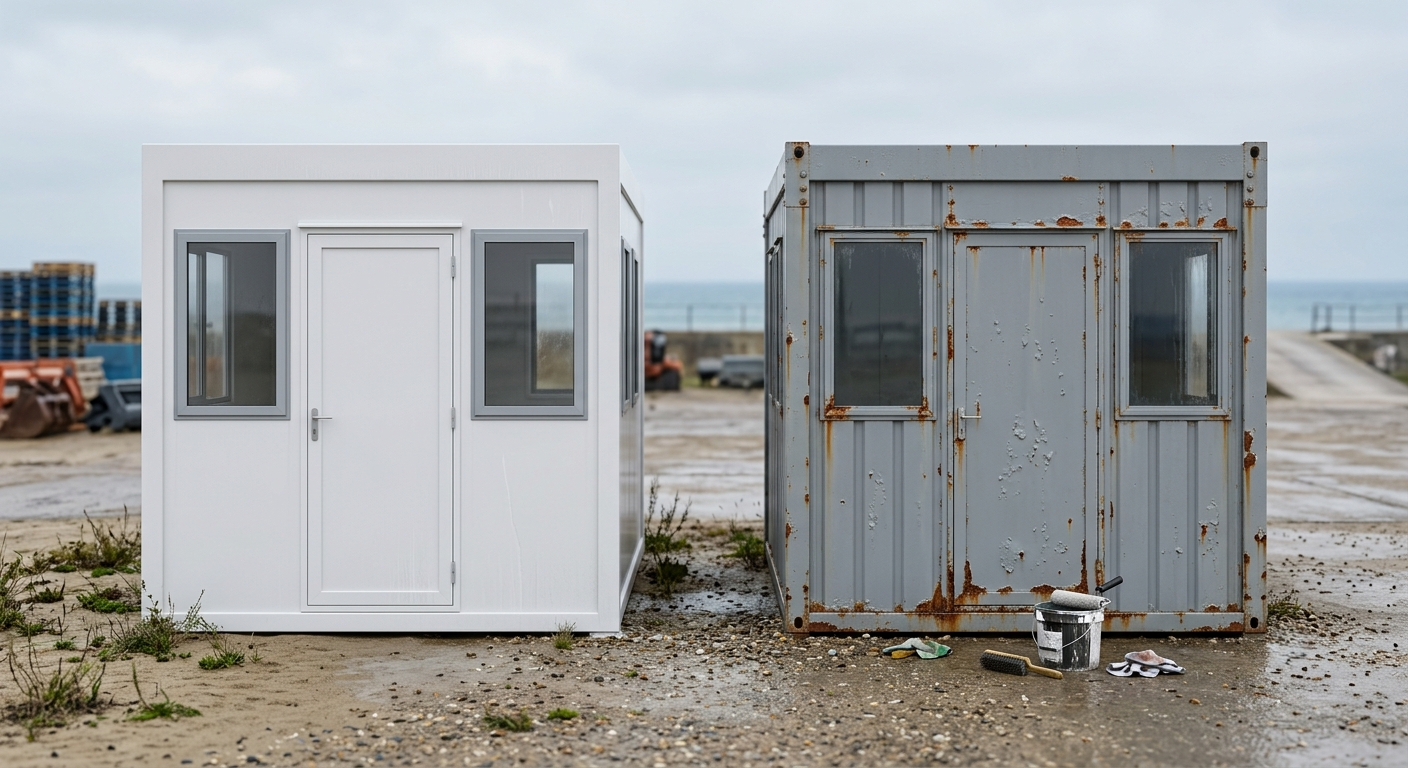
Steel needs maintenance, in wet or salty places. FRP needs less, but not zero. For steel plan an inspection. Check welds, screw heads roof edges and any scratched paint. Touch up damage early because rust grows quietly and then suddenly. When you look at an frp office cabin you should wash the surface of the frp office cabin inspect the sealants, on the frp office cabin and check the door and window frames of the FRP office cabin. Replace gaskets before leaks begin. That is roughly the routine.
Fewer repairs mean fewer work stoppages, which heavily impacts teams sharing one small room.
Which Material Lasts Longer?
In conditions an frp office cabin generally lasts longer. Inland, a well-kept steel cabin easily lasts for years. The lifespan depends on environment. Up keep more than, on brand claims. Manufacturers often say that service lives will be long. Those service lives depend on perfect care. Request separate written warranties for panels, coating, structure.
Here is a simple rule. The life of steel gets shorter when moisture, salt and not taking care increase. The life of frp office cabin remains more stable even though exposure to sunlight can make the surface lighter or have a texture, over time. Good quality gelcoat or resin that stops the suns effects helps with this.
Also check fire behaviour. Ask if panels use flame-retardant resin and pass specific tests; noncombustible steel offers distinct advantages at hazardous sites.
Which Material Works for High-Traffic and Heavy-Duty Sites?
Steel works better for impact strength and structural flexibility. FRP is better at resisting corrosion. Is lighter, in weight. At high-traffic sites it’s important to consider both steel and FRP. A durable GI sheet site office cabin withstands dust, forklifts, and heavy door slamming, while allowing simple welding, cutting, and future space extensions.
frp office cabin resists wear yet cracks under heavy impact. Repairs are possible with resin and fibre patches, though they need skilled hands.
For conditions many buyers go with a steel frame that has FRP covering. This mix of parts can offer both support and protection from rust. It isn't the choice, for everything but its something worth talking about.
How Do You Choose the Right Material for Your Site?
Match the material to the condition, on your site. Begin with climate with use then with budget.
Use this quick guide:
- Coastal or salty air: pick an FRP office cabin.
- High humidity and heavy rain: pick an frp office cabin, or high-grade coated steel with strict upkeep.
- Dry inland, short project: pick GI steel.
- Heavy impact or frequent modification: pick steel or a hybrid.
- Frequent relocation: lean towards an frp office cabin for the weight advantage.
- Fire-sensitive area: Choose steel or verify fire certification.
Before you sign anything check three details. First ask for sheet thickness and zinc coating details. Then look for compliance with IS 277 a standard, for steel sheets.. Second, confirm the insulation core. Third, ask for references from similar climates.
If you want to see factory-built options check out our Prefabricated Structures page. It shows how cabins, shelters and toilets all follow the build logic.
Is an FRP Office Cabin Worth It for a Small Team?
Yes, if your site is wet, salty, or remote. Small teams feel temperature swings and leaks faster, because there is less space to escape them.
A small frp office cabin is quieter during rain and cooler, in the sun compared to metal. It is also easy to move when the project is done. Many people use the frp office cabin again at a new location, which helps spread the cost over more years.
If your team is small and the site is dry steel is still a choice. Pick based on what’s practical not what’s popular.
What Mistakes Should Buyers Avoid?
The biggest mistake is buying on price alone. The second is ignoring the site’s weather.
Avoid these traps:
- Comparing quotes without matching thickness and insulation.
- Assuming “fibre” means weak. Quality FRP is engineered, not decorative.
- Skipping foundation prep. Even light cabins need level, drained ground.
- Forgetting ventilation, electrical load, and door placement during planning.
- Ignoring after-sales support.
Ask suppliers for site visits, spec sheets, and delivery timelines—reliable suppliers answer quickly, honestly, and without drama.
A cheap cabin that rusts through in three monsoons is not cheap. It is a loan with interest.
Google’s guidance on helpful content asks writers to share first-hand, useful information, so here is mine: visit a cabin that has stood on a similar site for three or more years. Photos fade. Real walls tell the truth.
Summary: FRP vs Steel Office Cabins at a Glance
An FRP office cabin suits coastal, humid, and relocation-heavy projects. Steel suits dry, budget-driven, and impact-heavy ones. Neither material wins everywhere.
- Weight: FRP is lighter.
- Insulation: FRP insulates better by itself; steel needs sandwich cores.
- Corrosion: FRP clearly leads near salt and moisture.
- Cost: steel is cheaper upfront; FRP can win over the long run.
- Lifespan: depends on climate; FRP holds steadier in harsh conditions.
- Strength and fire: steel has the advantage.
Choose for extreme weather, not averages: an FRP office cabin excels in humid coastal zones, while steel performs best where air remains dry.
Not sure which material fits your site? Get Material Advice from our team before you finalise your order.