

When a construction project begins the site office is not always the thing that comes to mind. Yet engineers soon require a place to work drawings must be examined papers begin to stack. A quiet room is needed for meetings.
That is where the choice between a porta cabin office and a traditional site office becomes important. One is largely prepared away from the project and brought to the site as a porta cabin office. The other is constructed around the location where it will be used. The real question is not simply which option costs less on day one alone. It is which one makes more sense over the full project cycle.
A traditional office can make sense when the building will stay in one place for years. A porta cabin office can be more practical when the project is temporary, the location may change, or the same office can serve several projects. This comparison looks at setup time, mobility, reuse, maintenance, and total cost over three to five years.
What Is a Porta Cabin Office?
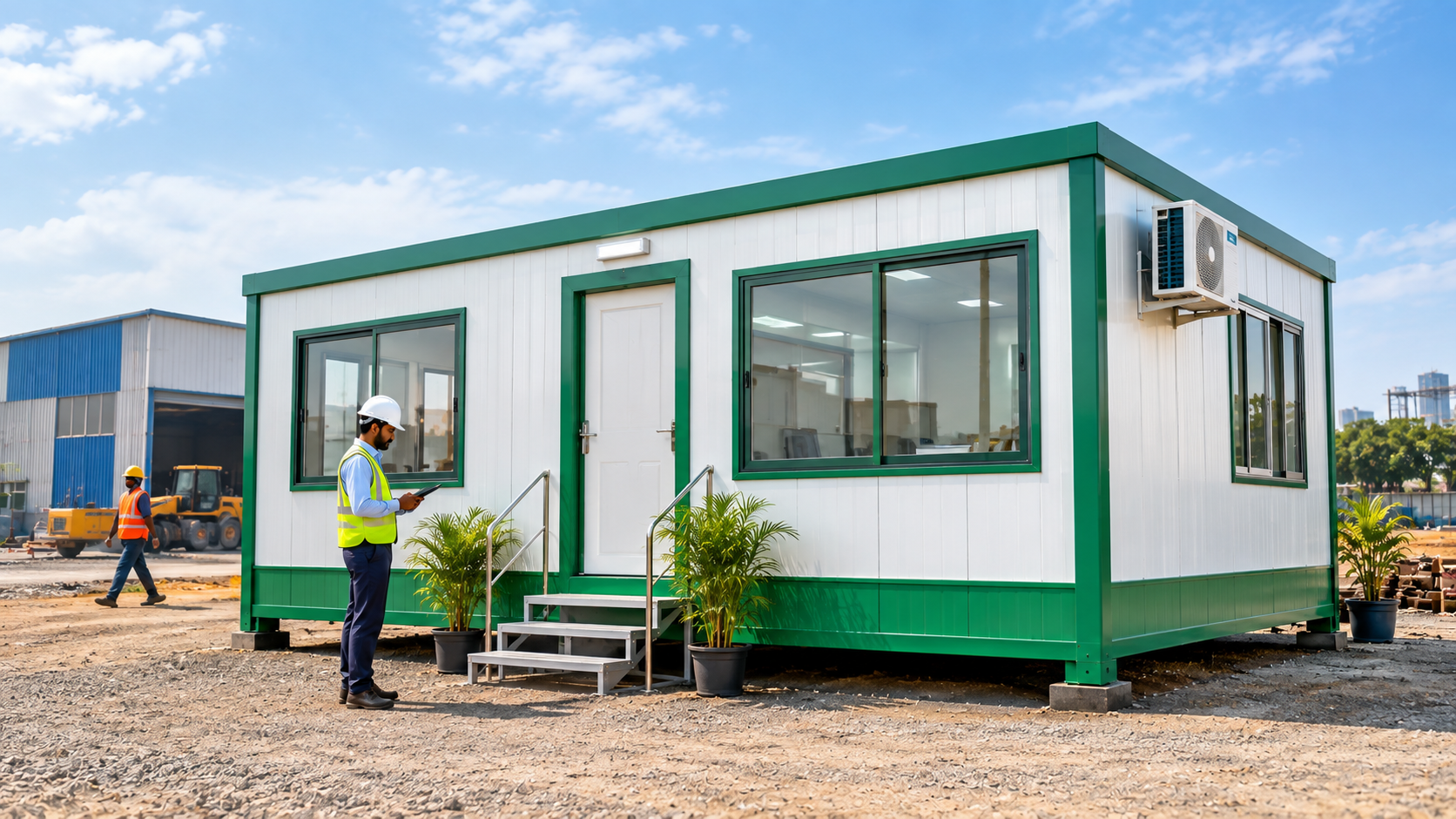
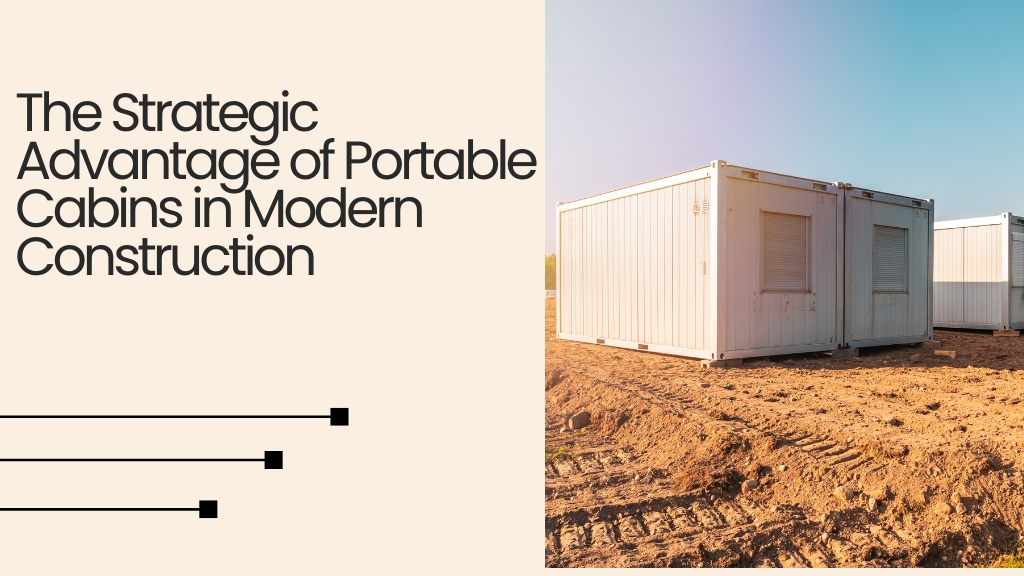
A porta cabin office is a prefabricated or relocatable workspace that is built largely away, from its final location and then moved to be installed. Than finishing every wall, door, partition, trim and service, on the construction site a large part of the work can be done inside a controlled factory setting. When the unit is ready it is moved to the construction site, placed in position set up and linked to the services.
A porta cabin office can serve as a project office an engineers room, a site administration area, a meeting room a security office or a temporary workspace. The Modular Building Institute calls buildings structures that can be transported reused, reconfigured or repurposed. This means that mobility is a part of their value not just an afterthought.
What Is a Traditional Site Office?
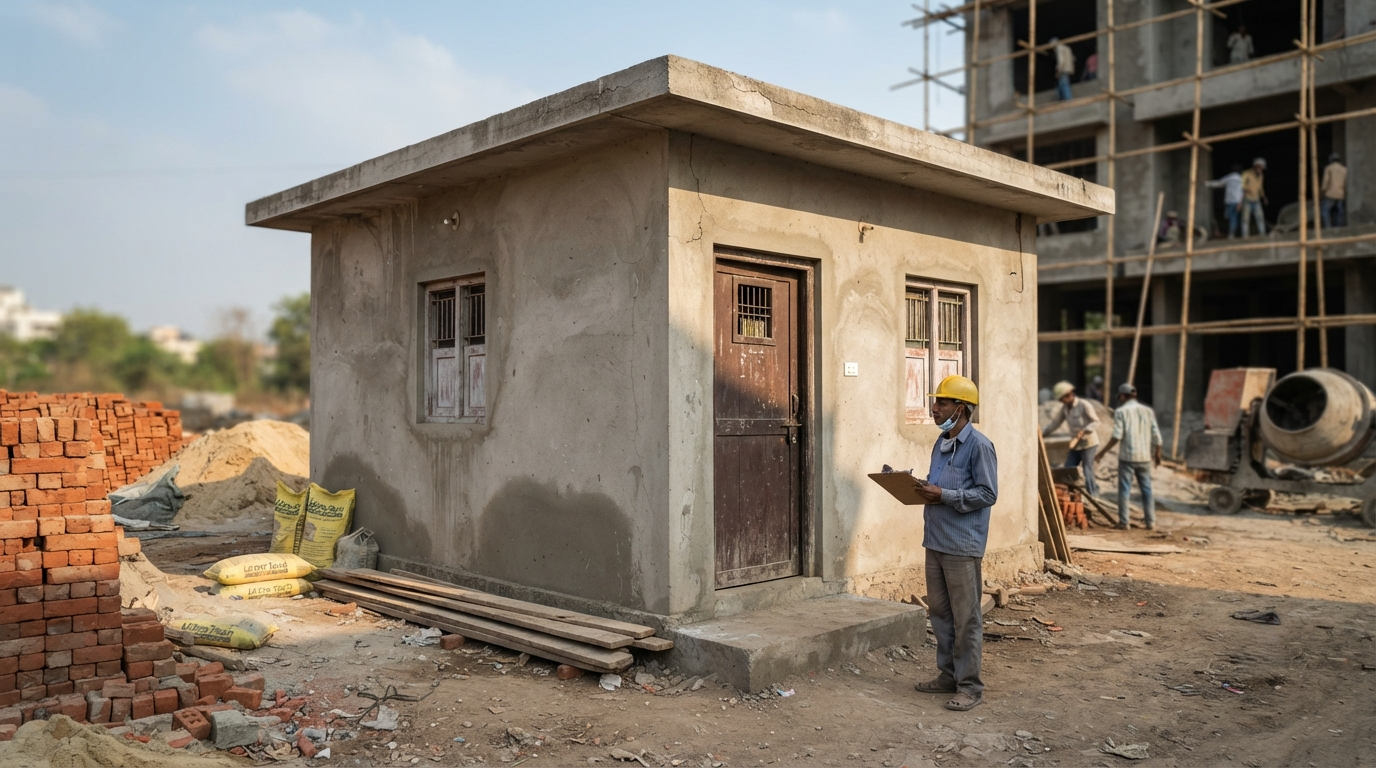
A traditional site office is normally constructed directly at the project location. Depending on the project, it could be a brick-and-mortar room, a steel-framed structure, a masonry office, or a temporary tin-shed arrangement. There is no single construction method or universal cost. The specification depends on the project, location, expected duration, and required level of comfort.
The main difference appears when the project ends. A permanent office can remain as part of the property. A temporary office may need dismantling, modification, or replacement at the next location.
That can matter a lot for contractors who handle several temporary projects.
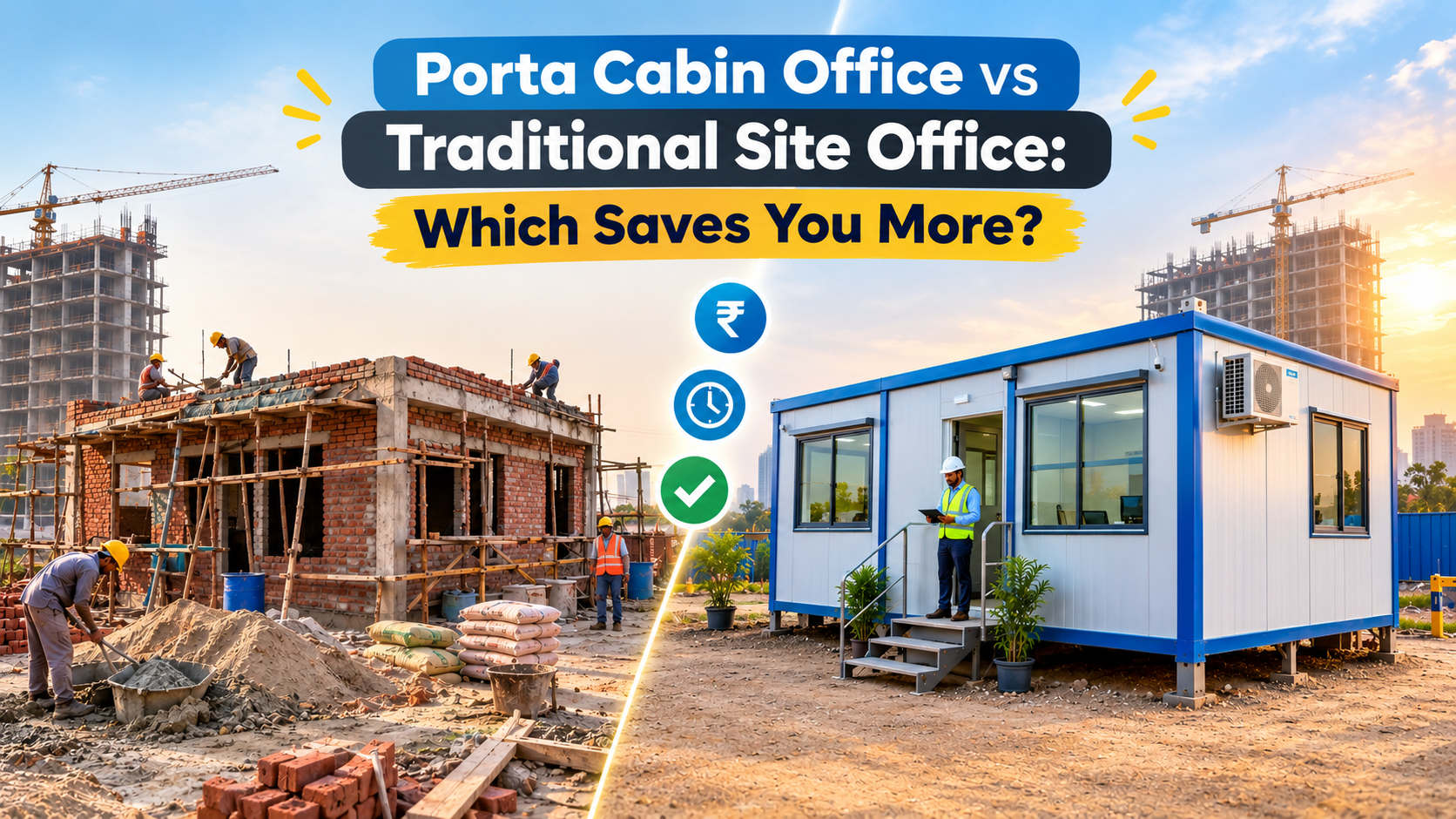
Porta Cabin Office vs Traditional Site Office: What Is the Main Difference?
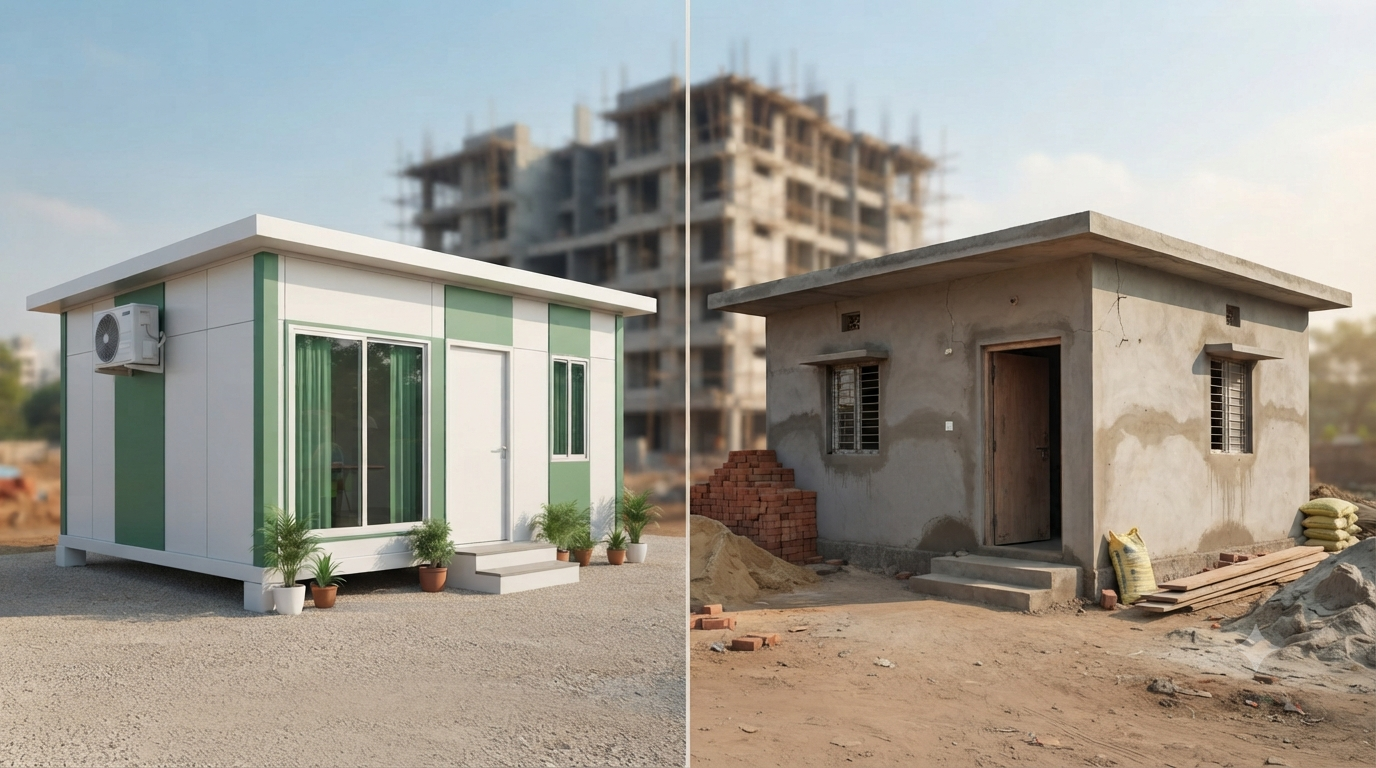
The basic difference is mobility. A porta cabin office is manufactured, transported, and installed with future movement in mind.
A traditional office is normally constructed around the site where it will remain. Factor Porta Cabin Office Traditional Site Office Manufacturing Mostly off-site Mostly on-site Installation Usually less site construction More site work Mobility Designed for relocation Usually difficult Reuse Can support future projects Often tied to one site Site disruption Can be lower Can be higher Long-term permanence Depends on design Strong Future relocation Practical Often involves dismantling So this is not simply a cheap-cabin-versus-expensive-building comparison.
It is a mobile-asset-versus-site-specific-construction decision.
Which One Is Faster to Set Up?
A porta cabin office can reduce the amount of construction that needs to happen after the unit reaches the project. Manufacturing can take place while the site team prepares the installation area. After delivery, the remaining work may include positioning, installation, and utility connections. Traditional construction usually involves more activities at the final location.
Base preparation, framing, walls, roofing, electrical work, doors, windows, and finishing can all add time. The exact schedule depends on size, site access, design, approvals, transportation, and utility requirements. The Modular Building Institute notes that installation time varies with project conditions.
Why Does Setup Time Affect Cost?
Every extra day before an office becomes usable can affect project administration, supervision, meetings, document handling, and temporary arrangements. With conventional construction, the office itself becomes another small construction job. With a porta cabin office, much of the building work can be completed before delivery, depending on the supplier's production schedule.
That can help a project team become operational sooner. We still have to remember that transport, installation, site preparation and service connections can add time. A prefabricated unit is not a box that appears fully connected the moment it reaches the gate.
Which Option Is Easier to Move?
This is one area where a porta cabin office has a clear practical advantage. If a project moves to another location, a relocatable unit can potentially move with it. The process still needs planning. Transport equipment, route access, lifting arrangements, utility disconnection, and local requirements may all need attention.
A traditional brick office does not normally offer the same flexibility. If another project needs an office elsewhere, the company may have to build another one. That difference matters when a contractor works on multiple temporary sites.
Instead of treating the office as a one-project expense, the company can treat a relocatable unit as a reusable business asset.
Can a Porta Cabin Office Be Reused on Multiple Projects?
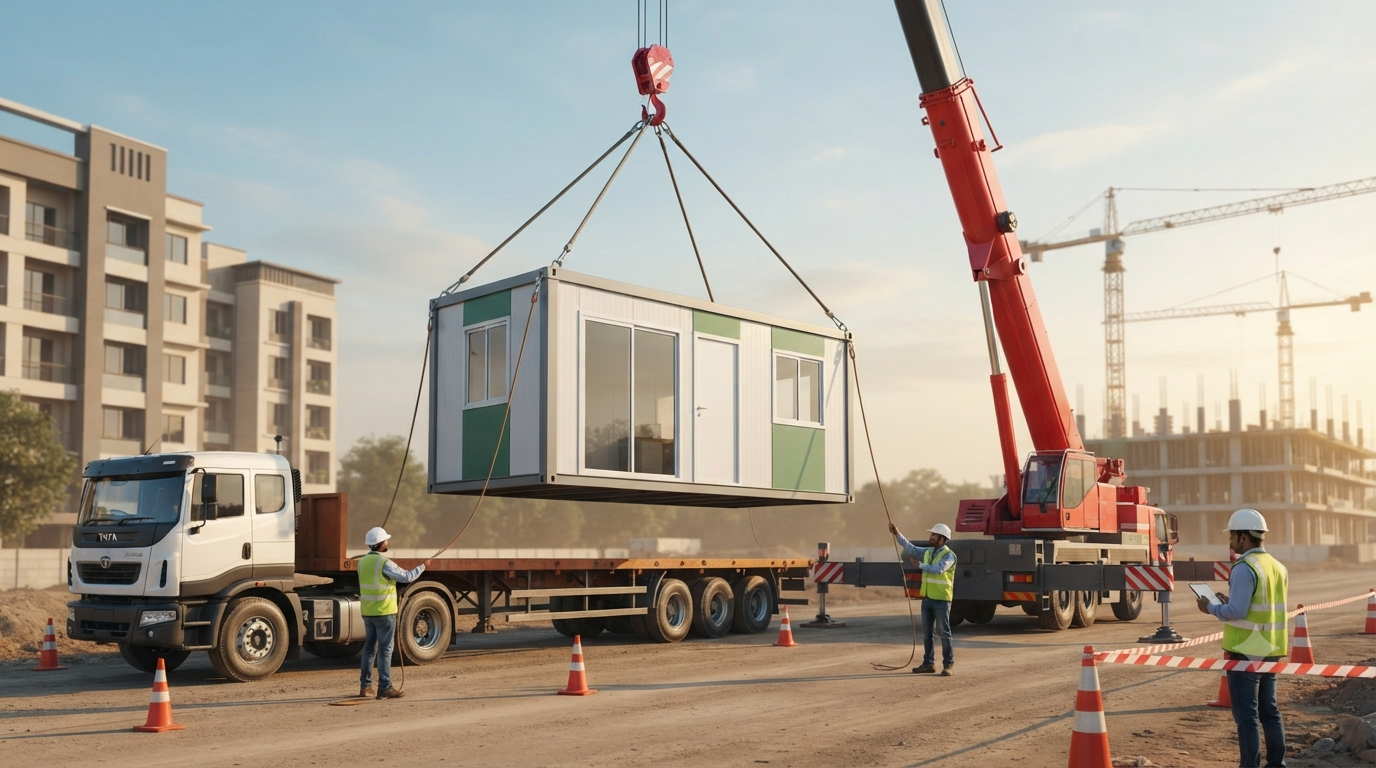
A porta cabin office can potentially serve one project, be inspected or refurbished, and then move to another site. Imagine a contractor has three projects over five years.
A conventional office may be built for Project A and then dismantled when the work ends. A reusable unit may instead move from Project A to Project B and later to Project C. That does not mean every cabin can be moved endlessly without maintenance. Repeated transportation can create wear on panels, doors, windows, flooring, joints, and services.
But the possibility of reuse changes the cost calculation. The original investment may support more than one project. MBI specifically describes relocatable buildings as being designed for multiple installations, relocation, refurbishment, reconfiguration, and reuse.
How Does Mobility Change the Three-to-Five-Year Cost?
This is where looking only at the purchase price can give the wrong impression. Imagine a contractor buys a porta cabin office for a two-year project.
When that project ends, another project begins somewhere else. The company may have to pay for transport and reinstallation, but the porta cabin office may avoid the need to construct a completely new office.
Now compare that with two separate site-built offices. The second project could require another round of materials, labour, site preparation, finishing, and service work. This does not automatically make the relocatable option cheaper. Transport and installation are real costs.
What Should Be Included in Total Cost of Ownership?
When comparing a porta cabin office with traditional construction, do not stop at the first quotation.
A useful three-to-five-year calculation should consider: Initial purchase or construction cost. Site preparation. Transportation. Installation. Electrical and utility connections. Interior finishing. Repairs and maintenance. Relocation costs. Refurbishment between projects. Dismantling or disposal. Residual or resale value. For a temporary traditional office, dismantling can become an additional cost when the structure has no future use.
Is a Porta Cabin Office Always Cheaper?
No. Portability does not automatically mean a lower price. A customized porta cabin office that has better insulation, air‑conditioning, special electrical systems, plumbing, partitions and high‑quality finishes can be more expensive, than a basic temporary shed.
On the side a simple tin‑shed office may start at a lower price but might give less comfort or need to be replaced or rebuilt when the project changes. The right comparison is between options that offer similar overall functionality. A finished, insulated porta cabin office should be compared with a traditional office that provides a similar working environment.
What About Porta Cabin Office Price?
The porta cabin office price can vary according to size, materials, insulation, electrical work, doors, windows, flooring, partitions, transport, installation, and customization. There is no single price that applies to every project. That is why online starting prices should be treated carefully. A basic shell is not the same as a fully equipped project office.
When you request an office cabin price ask the supplier to separate the office cabin, transportation, installation, electrical work, plumbing, support requirements and optional features.
How Does a Modular Office Cabin Compare With a Traditional Office?
A portable office cabin can complement a cabin while the modular office cabin combines prefabricated construction with the flexibility of a relocatable structure.
Before the office cabin arrives you can plan for points, windows, doors, flooring, partitions, insulation and other requirements. That does not remove site work completely. The portable office cabin still needs suitable access, a proper installation area, utility connections, and installation according to the manufacturer's requirements.
What About a Site Office Cabin?
A site office cabin gives engineers, supervisors, contractors, project managers, and administrative staff a dedicated workplace near the project. A portable office cabin can also provide a standardized workspace across projects. The team does not have to reinvent the office arrangement every time a new site begins.
When Does Traditional Construction Still Make Sense?
A porta cabin office is not the right answer for every project. Traditional construction can make sense when the office will stay in one place forever. The owner wants the building joined with the property. It can also work for projects that need floors, big spaces, between supporting structures, complicated services that are fixed in place or special designs that are easier to build with regular methods. The choice should be based on what the project needs.
When Is a Porta Cabin Office More Practical?
A porta cabin office becomes more useful when the project is temporary or the location may change. Think construction projects, infrastructure works, industrial sites, road projects, remote work areas, and businesses with several project locations. The common factor is constant movement.
If the next project is unknown, building an office that cannot move may not fit the way the business operates. A relocatable unit gives the company another option: move it, reuse it, refurbish it, or potentially sell it.
A Simple Three-Year Cost Comparison Let's look at the logic without inventing market prices.
Scenario A: Traditional Site Office Project 1 requires an office. The company pays for construction, labour, materials, finishing, and utilities. When the project ends, the office may remain on the property, be dismantled, or require modification. A site office cabin may be needed at another project, so the company starts the construction process again.
Scenario B: Porta Cabin Office The company purchases a porta cabin office and installs it at Project 1. When Project 1 finishes, the unit is inspected and refurbished if needed. It is then transported to Project 2. The company pays for transportation and reinstallation, but the porta cabin office may avoid constructing an entirely new office. The saving, if there is one, comes from reuse rather than assuming that the initial cabin price is always lower.
What About a Five-Year Cost Comparison?
The five-year view makes the asset-versus-project difference clearer. Suppose a contractor handles several temporary projects during those five years.
A traditional office may be constructed repeatedly. A relocatable office can potentially move between projects.
A useful calculation is: Total relocatable-office cost = purchase + transport + installation + maintenance + relocation + refurbishment − residual value.
For traditional construction: Total site-office cost = construction + site preparation + maintenance + modifications + dismantling or disposal. These are not universal formulas.
The final result depends on the number of projects, distance between sites, cabin specification, and local construction costs.
Which One Saves More Over Three to Five Years?
There is no single answer for every project. A porta cabin office can become financially attractive when the same unit is reused across several temporary projects because the original structure continues providing value after the first project. A traditional office can make financial sense when the building remains in one place for a long period and relocation has little practical value.
So do not ask only "Which one is cheaper today?" Ask, "How many projects can this office support?" That question can change the calculation.
Final Verdict: Which Office Saves More?
A porta cabin office can make more financial sense over three to five years when the business can reuse and relocate the same unit across several projects. The porta cabin office value comes from flexibility, potential time savings, reuse, and the ability to spread one investment across more than one project.
A traditional site office can make more sense when the structure is effectively permanent and the owner wants a building integrated into one location. So do not compare only the office cabin price. Compare the full lifecycle cost. Purchase or build it. Install it. Maintain it. Move it if necessary.
Then ask what value remains after the first project ends. For a contractor managing changing project locations, that final question may matter more than the first quotation.
Compare Your Options If you are evaluating a porta cabin office for a construction, industrial, or infrastructure project, compare specifications rather than looking at price alone. Review project duration, expected future projects, relocation distance, required size, insulation, electrical needs, maintenance requirements, and expected reuse.
Explore Portable Office Cabins and Site Office Cabins before requesting a quotation.
Summary
A relocatable office can be useful when a project needs quick deployment, mobility, and reuse across locations. Traditional site offices can make more sense for permanent sites and long-term office buildings. The better choice depends on project duration, relocation plans, specifications, maintenance, and total cost over several years.