

When a company needs a place to work fast words like modular, portable, prefabricated and porta cabin can sound the same. They are not always the thing. A modular office cabin is built around a coordinated system of factory-made components or modules. A conventional porta cabin is often supplied as a more self-contained unit. That difference becomes important when a project needs multiple rooms, better finishes, or room to expand.
This guide explains the differences, in simple terms. Guide helps you compare construction method, flexibility, installation and long‑term usefulness before choosing a cabin.
What is a modular office cabin?
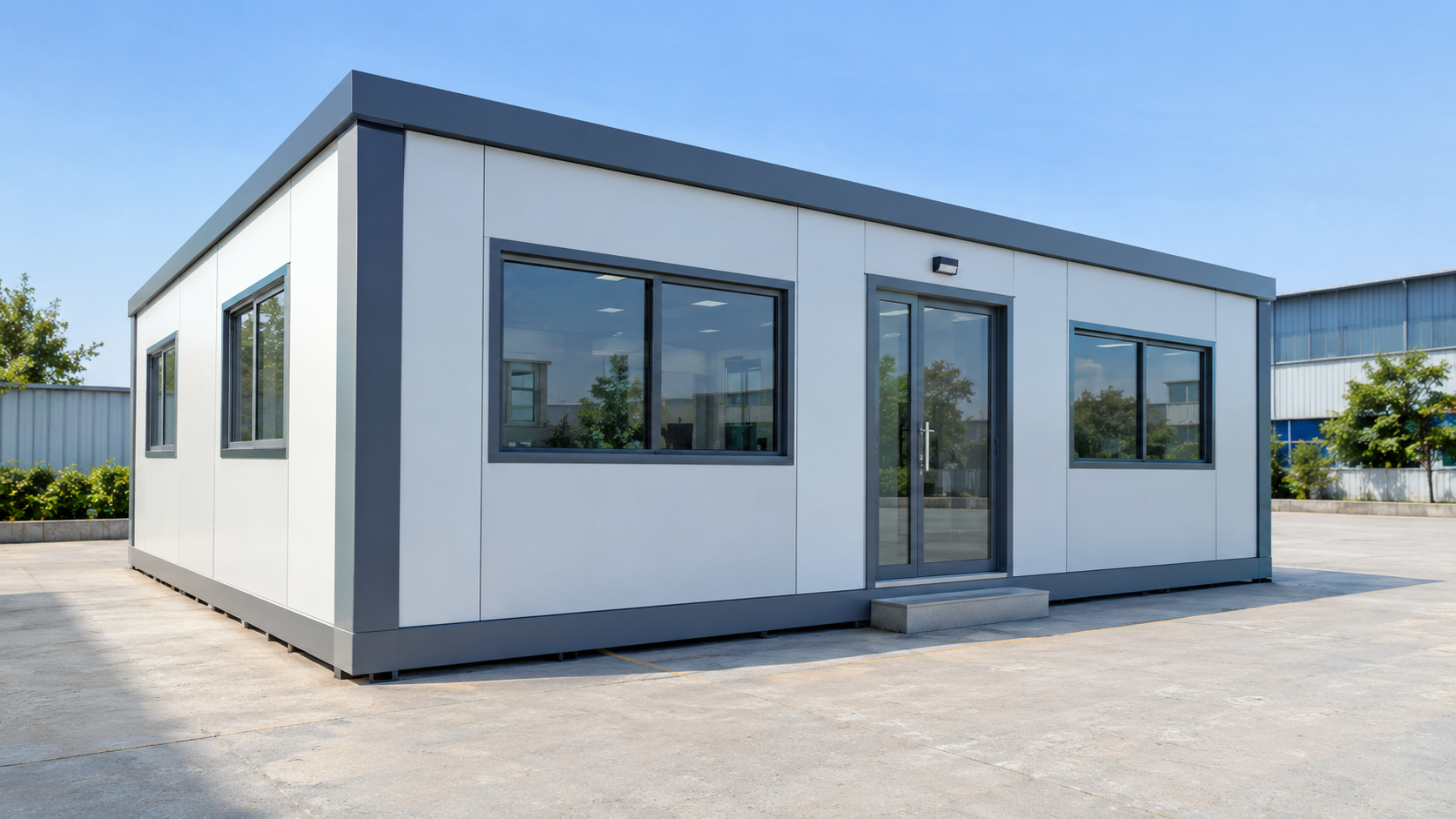
A modular office cabin is built from factory‑made parts and building parts that are assembled to create a planned workspace. Depending on the maker the modular office cabin can include steel frames, wall panels, roofing, doors, windows, flooring, insulation and service provisions. The main idea is the system, not simply the appearance. A modular office cabin can be planned as one module or as several connected modules, depending on the design.
For a project this method can create different work rooms meeting areas, reception spaces, storage areas or staff facilities. Parts are made before they get to the site, which can move a part of the building process into a controlled factory setting.
BIS material on prefabricated construction discusses modular coordination, components, joints, manufacture, transportation, and erection. That shows why the construction system matters when comparing prefabricated workspace options.
How is a modular office cabin different from a porta cabin?
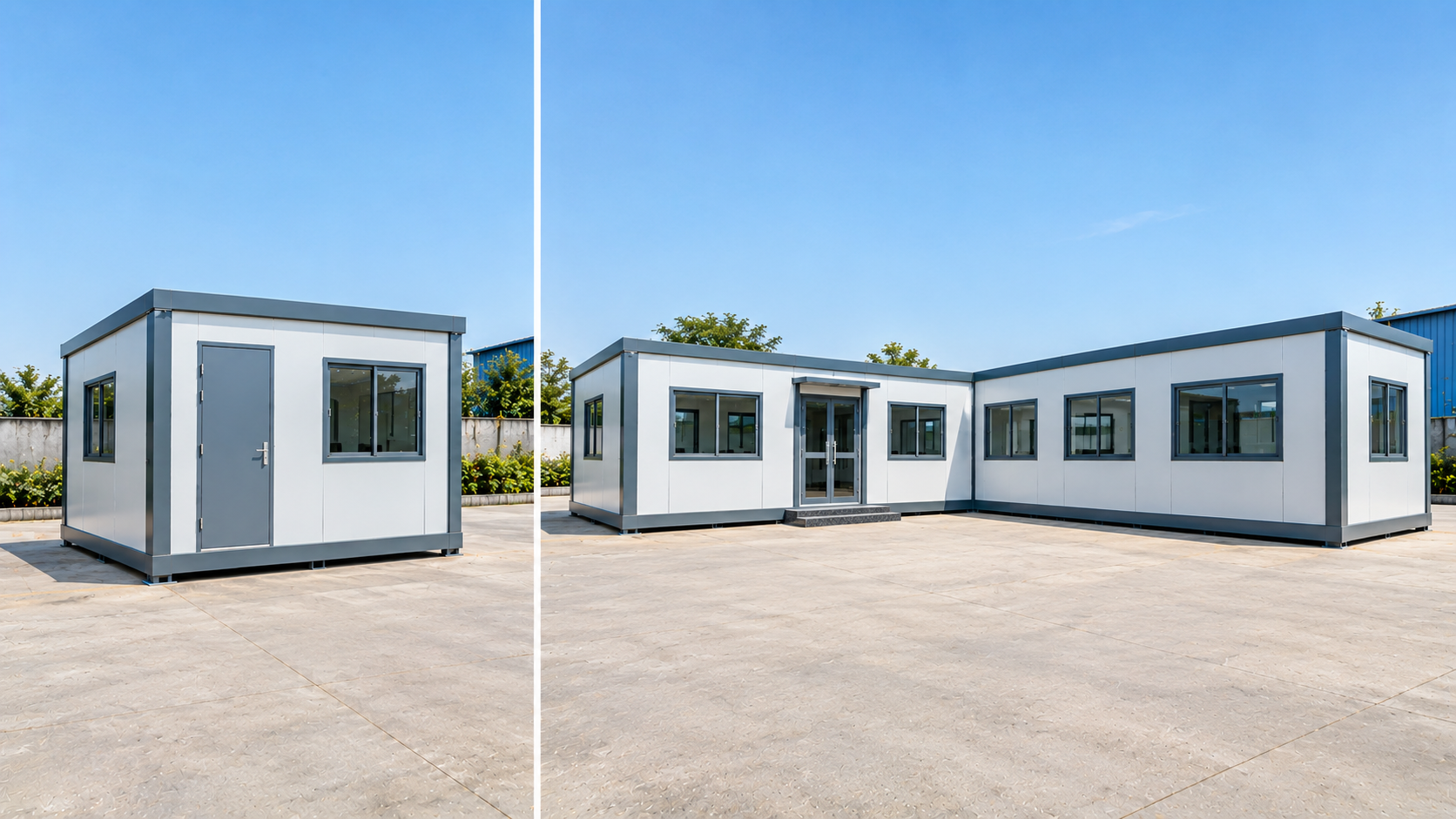
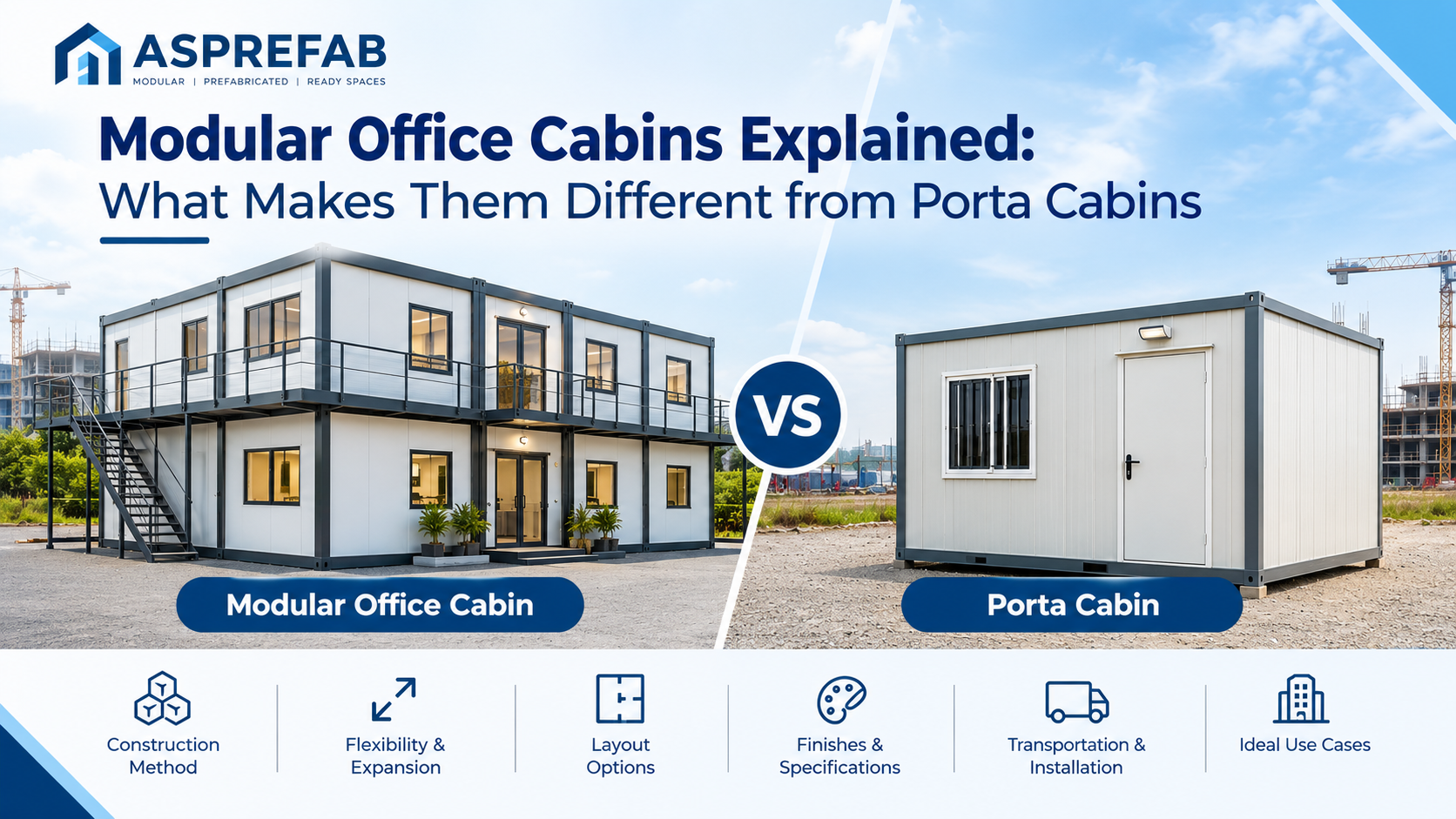
The simplest difference is the way the workspace is planned and assembled. A portable office cabin is commonly delivered as a finished, standalone unit, while a modular office cabin can use multiple coordinated components or modules. A single porta cabin can be useful when a project needs one compact office, security room, reception cabin, or administrative space. It can arrive largely ready for use and may require less site assembly than a larger modular office cabin.
A modular office cabin becomes more useful when the requirement looks like a complete workplace rather than one room. A project might need a manager's room, several workstations, a meeting room, and a pantry. Neither option is automatically right for every project. The choice depends on floor area, layout, project duration, transportation, site access, services, and future requirements.
Are modular cabins and portable offices the same?
Not necessarily. Portable describes mobility, while modular describes the way the building is designed and assembled. A portable unit can be built as one cabin and moved to the place where it will be used. A modular office cabin can also be portable. It might come in parts that are sent separately and then put together at the destination.
This distinction matters when comparing portable offices. A single unit can be ideal, for a requirement. A modular office cabin offers flexibility when the office needs several connected office spaces.
When you look at office cabins do not depend only on the product title. Ask how the cabin is built if parts can be swapped, if modules can link together and if the design will support expansion.
Why does the construction system matter?
The construction system affects more than appearance. It can influence installation, maintenance, layout flexibility, transportation, and the way electrical and other services are integrated. In prefabricated construction planning happens before any components reach the site. The BIS guidance for prefabricated systems points out that coordinating installations, like piping, wiring and accessories is essential.
For an office cabin coordination is especially important. When several rooms share electrical, lighting, air‑conditioning, plumbing or communication needs the modular office cabin must be carefully planned. Good planning does not eliminate site work. Instead, it helps move suitable tasks into manufacturing and controlled assembly, reducing the chance of making major changes after components reach the project.
When does a modular office cabin make more sense?
A modular office cabin can make sense when the project needs more than one simple room. It is particularly worth considering when the workspace needs several functional areas or may expand later. Typical situations include multi-room project offices, reception and waiting areas, management rooms, meeting rooms, staff facilities, larger administrative spaces, and phased development.
Imagine a building that begins with four workstations and one room, for the manager. Then the team gets bigger. Needs more space. If the first modular office cabin was made to grow a new part can be added. This means the whole office doesn't have to be built from scratch. That possibility must be confirmed with the manufacturer. Expansion depends on the structural system, connection details, available site area, transportation access, and service planning.
What are the advantages of a modular office cabin?
The biggest advantage is layout flexibility. A modular office cabin can be designed around how people actually use the workspace instead of forcing every requirement into one fixed box. A modular office cabin can also support internal arrangements. I think customers can choose partitions, doors, windows, flooring, insulation, electrical points, lighting and air‑conditioning provisions, for an office cabin. Factory production can also improve consistency because components are manufactured in a controlled environment before delivery. However, quality still depends on the materials, workmanship, design, and manufacturer.
The National Building Code of India includes provisions related to prefabrication and systems building, along with structural design, fire and life safety, building services, and construction management. Compliance with applicable requirements still depends on the specific project and its design.
Are there limitations to modular cabins?
Yes. Modular construction is not a shortcut that removes every planning requirement. A modular office cabin requires design coordination, than a simple single-unit cabin. Because several components must fit together correctly the modular office cabin needs design coordination. The site team and the manufacturer must coordinate foundations, levels, drainage, electrical connections, plumbing and access.
Transportation is another practical issue. Module dimensions, road conditions, lifting equipment, unloading space, and access to the final location can influence what is possible. For a small requirement that only needs one room, a modular office cabin may add unnecessary complexity. The right solution is the one that matches the actual brief.
What is a porta cabin office best suited for?
A porta cabin office can work well when the requirement is compact, straightforward, and largely self-contained. Common applications include construction-site offices, security cabins, temporary administrative rooms, reception spaces, project offices, and small work areas.
A single portable unit can be easier to specify when there is no need for several connected rooms. It can also suit projects where the cabin may need to move between locations.
However, mobility depends on the actual cabin design, lifting arrangements, transport method, dimensions, and site access. A cabin should not be described as easily movable without checking these practical factors.
Can modular cabins have higher-spec finishes?
Yes. Modular construction does not automatically mean basic interiors. A modular office cabin can be specified with different wall and ceiling finishes, flooring, doors, windows, insulation, lighting, electrical provisions, and air-conditioning points. This makes a modular office cabin relevant for workplaces where appearance and comfort matter. Higher-spec interiors may be useful when the office will host clients, visitors, managers, or employees for longer periods.
Still words like premium or high quality don't mean much by themselves. It is better to ask for details. Get the material descriptions thicknesses, insulation type, flooring specifications, hardware used and electrical provisions, in the quotation. Be specific.
How do ready-made office cabins compare?
A readymade office cabin usually focuses on convenience and speed. The cabin may arrive substantially completed, reducing the amount of construction required at the destination. That can work well when the required layout is simple and the project needs a workspace quickly. But ready-made does not automatically mean modular.
A ready‑made unit can be a finished cabin while a modular office cabin can combine several factory‑made elements into a larger workspace. The difference lies in the construction system not in how quickly the product can be delivered. When comparing a readymade office cabin with a modular option, look at the structure, layout, materials, installation, transportation, services, and future flexibility.
What should you check before buying an office cabin?
Begin by clarifying the intended use. A short‑term site office and a long‑term administrative workspace may require different specifications. Check the structural frame, wall and roof system, insulation, flooring, doors, windows, electrical layout, ventilation, air-conditioning provisions, and plumbing requirements. Also clarify who handles transportation, unloading, positioning, assembly, foundation work, utility connections, and commissioning.
Ask one question, about the modular office cabin. Ask if the system can be expanded or reconfigured later. If the answer is yes ask how the expansion works and if the existing services can support the modular office cabin.
Before signing a quotation compare the things. Check whether transport, unloading, assembly, foundation preparation, electrical connections, taxes and finishing work are included. This simple check can prevent a starting price from becoming a much larger project cost after delivery and installation carefully on site and schedule.
Modular office cabin vs porta cabin: what is the practical difference?
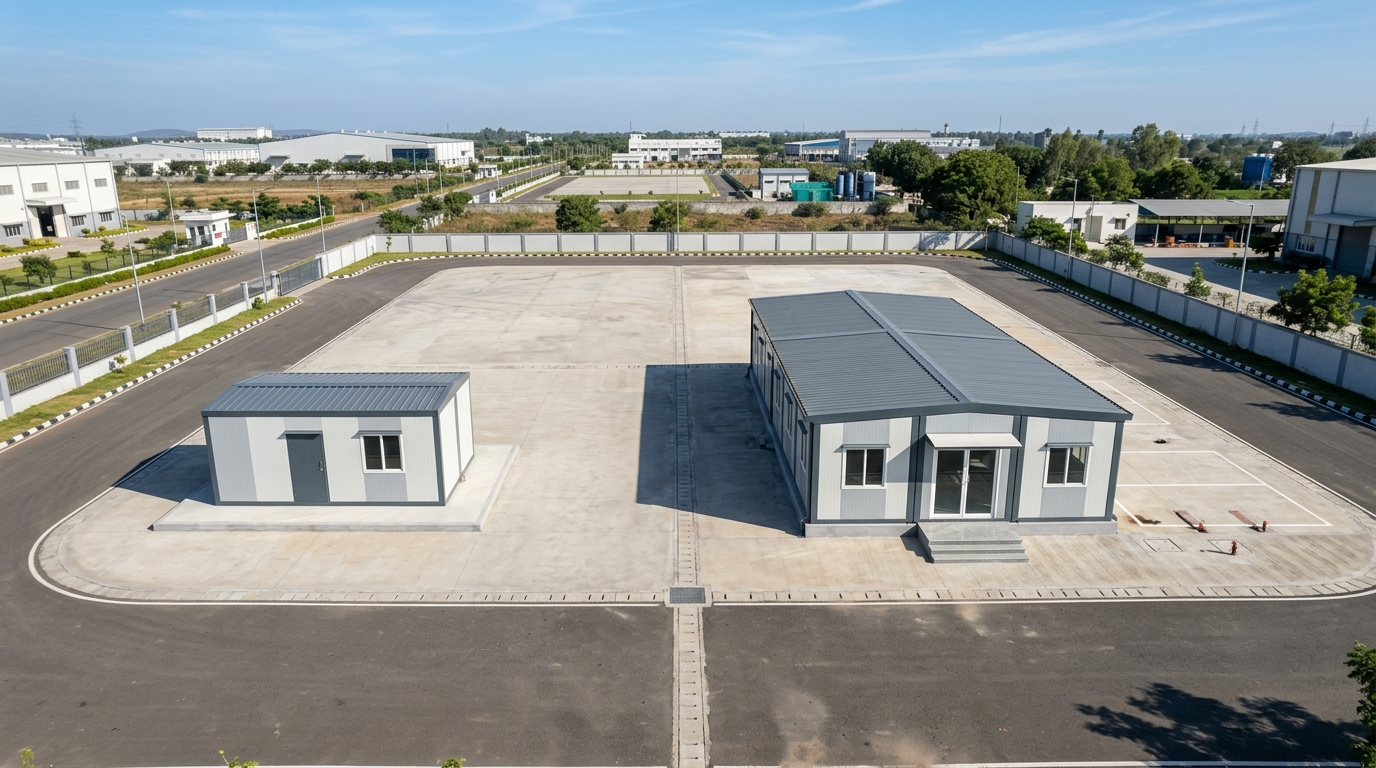
Think of the comparison as system versus simplicity. A conventional portable unit can suit a compact requirement where one finished workspace is enough. A modular office cabin can suit a larger requirement where multiple rooms, planned layouts, higher specifications, or future expansion are important. The difference is not that one type is always better. It is about choosing the construction method, for the project.
If your project requires one office a single unit could be enough. If it requires a workplace, with many different functions a modular office cabin could offer more flexibility. The final decision should come from the project brief, technical specification, site conditions, and future plans rather than from whichever product name sounds more attractive.
Key takeaways
A modular office cabin uses a coordinated system of factory-made components or modules that can be assembled into a planned workspace. A conventional porta cabin is often a more self-contained unit.
The main differences involve construction method, layout flexibility, installation, transportation, specification, and potential expansion.
Modular systems can suit multi-room offices, phased projects, and higher-spec workspaces. Single portable units can suit simpler requirements where one compact room is enough.
Before buying, verify the structure, materials, insulation, services, installation method, transportation requirements, and expansion capability. A detailed specification sheet will tell you much more than a product label.
Summary
This format is best understood as a flexible building system rather than simply a larger portable cabin. Its factory-made components can be planned around multiple rooms, different layouts, and, where the system allows it, future expansion.
A porta cabin office can remain a practical choice for compact, self-contained requirements. The right option depends on the project's size, duration, room requirements, site access, transportation, finish level, and future needs.
The smartest comparison is therefore not modular versus portable in isolation. It is about understanding exactly how each cabin is constructed, delivered, installed, and adapted to the project.
Looking for a workspace built around your project’s needs? Explore our solutions and Learn More.